From Mineral Concentrate to Finished Rare Earth Products
An important distinction in the rare earth industry is the difference between producing a mineral concentrate and producing separated rare earth oxides.
A mineral concentrate contains an increased proportion of valuable rare earth-bearing minerals, but the individual rare earth elements generally remain chemically bound within those minerals.
Additional downstream processing may produce mixed rare earth compounds, individual oxides and eventually rare earth metals or alloys.
These refined materials are used in applications such as permanent magnets, specialised electronics and advanced industrial equipment.
The distinction matters commercially because each stage involves different capital investment, technical capabilities, operating costs and potential customers.
A company producing a commercially acceptable monazite concentrate occupies a different position in the supply chain from a company manufacturing separated neodymium and praseodymium oxides.
Both activities are important, but they should not be confused.
Ark Mines and Rare Earth Processing at Sandy Mitchell
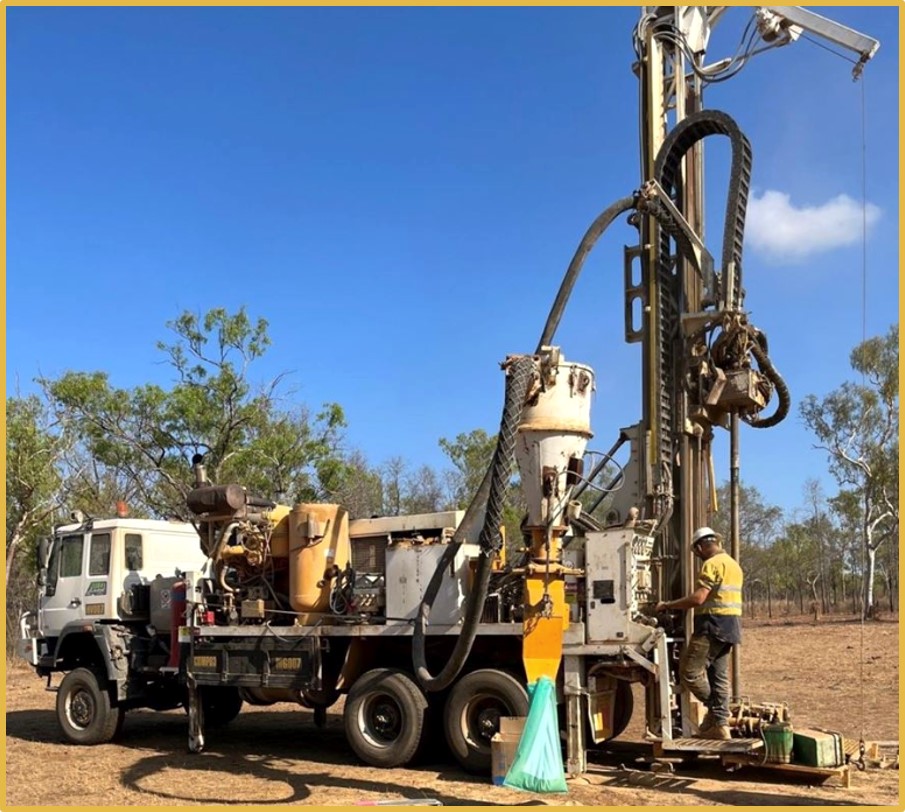
Ark Mines Limited is advancing its 100%-owned Sandy Mitchell Rare Earths and Heavy Minerals Project in Far North Queensland, approximately 230 kilometres north-west of Cairns.
The project is notable for its extensive shallow mineral sands system, which contains rare earth-bearing monazite and xenotime alongside other potentially valuable heavy minerals.
According to Ark Mines’ September 2026 Mineral Resource Estimate, Sandy Mitchell hosts 379.4 million tonnes at 5,430 parts per million monazite equivalent (MzEq), with 369.6 million tonnes classified in the Measured and Indicated categories.
Mineralisation extends from surface to an average depth of approximately 11 metres.
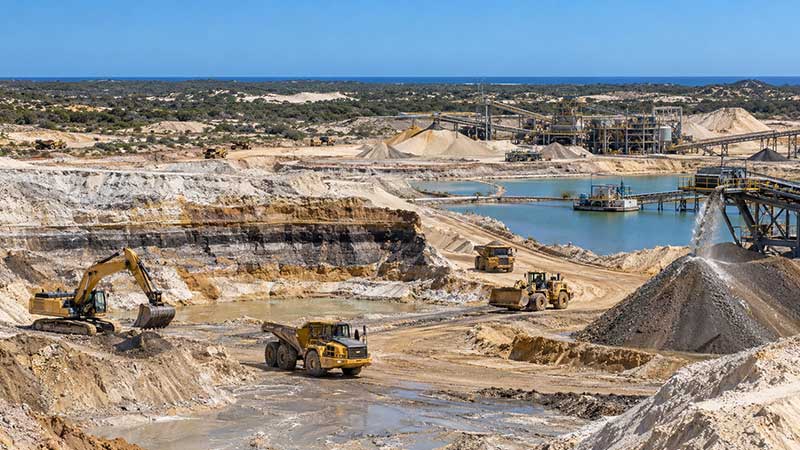
These characteristics are relevant to the project’s potential mining and processing approach because shallow, unconsolidated mineral sands may be amenable to relatively straightforward extraction and physical mineral concentration.
Why Sandy Mitchell’s Processing Characteristics Matter
A key focus of Sandy Mitchell’s development is the use of established mineral processing techniques to produce valuable mineral concentrates.
Previous metallurgical investigations have assessed techniques including size classification, gravity separation, attrition, flotation and magnetic separation.
Importantly, Ark Mines has reported successful testwork producing commercial-grade mineral products.
Results announced in 2026 included:
- A monazite concentrate grading 54.8% total rare earth oxides (TREO), plus 1.49% yttrium oxide (Y₂O₃).
- A leucoxene product grading 73.5% titanium dioxide (TiO₂).
The project also contains potentially valuable zircon and other titanium-bearing minerals, creating opportunities to investigate multiple product streams.
This product diversity is significant because it may allow the operation to generate value from minerals recovered alongside its principal rare earth products.
What Makes Mineral Sands Processing Attractive?
For a suitable deposit, physical concentration can offer operational advantages compared with processing hard rock ores requiring extensive comminution.
The opportunity is not simply to produce rare earth elements, but to do so through a technically efficient mining and beneficiation pathway.
For Sandy Mitchell, the shallow mineralisation, mineral assemblage and reported metallurgical results provide a basis for further process optimisation and economic evaluation.
However, successful laboratory testwork does not by itself establish commercial production economics.
Ark Mines is continuing metallurgical optimisation and project studies to determine the most appropriate development pathway.
The company has reported a granted Mining Licence and Environmental Authority, with an updated Scoping Study targeted for 2026, a Pre-Feasibility Study targeted for 2027 and first production targeted for 2028.
These remain development objectives rather than guaranteed outcomes.
Environmental Considerations in Rare Earth Extraction
As global demand for rare earth elements grows, reducing the environmental impacts of extraction and processing is becoming increasingly important.
Different extraction techniques carry different environmental challenges.
Hard rock mining can require substantial energy for crushing and grinding, while chemical processing may generate residues requiring specialised treatment.
Clay-hosted deposits can present challenges involving chemical leaching and the protection of soils and groundwater.
Mineral sands processing can reduce some of these requirements where physical separation techniques are suitable.
However, responsible operations must still address:
- Water sourcing, recycling and discharge.
- Land disturbance and progressive rehabilitation.
- Dust generation and erosion.
- Tailings and process residue management.
- Naturally occurring radioactive materials, including thorium and uranium where relevant.
- Energy use, emissions and biodiversity protection.
The environmental performance of any proposed operation must be established through project-specific engineering, impact assessment, regulatory compliance and ongoing monitoring.
The Future of Rare Earth Extraction and Processing
The rare earth industry is evolving as governments and manufacturers seek more reliable and geographically diversified sources of critical minerals.
Innovation is occurring throughout the supply chain, from improved mineral concentration to more selective chemical extraction and rare earth recycling.
Areas of development include advanced magnetic separation, improved flotation reagents, selective leaching technologies, alternative separation processes and methods designed to reduce energy and chemical consumption.
At the same time, mineral deposits that are well suited to conventional physical beneficiation are attracting interest because they may offer a practical route to supplying downstream processors.
The International Energy Agency has identified rare earth processing as a highly concentrated part of the global minerals supply chain, highlighting the importance of developing additional processing capability.
Australia has an opportunity to contribute through its geological resources, mining expertise, research institutions and emerging rare earth projects.